Elevating Heritage Properties: The Art of Transitional Design
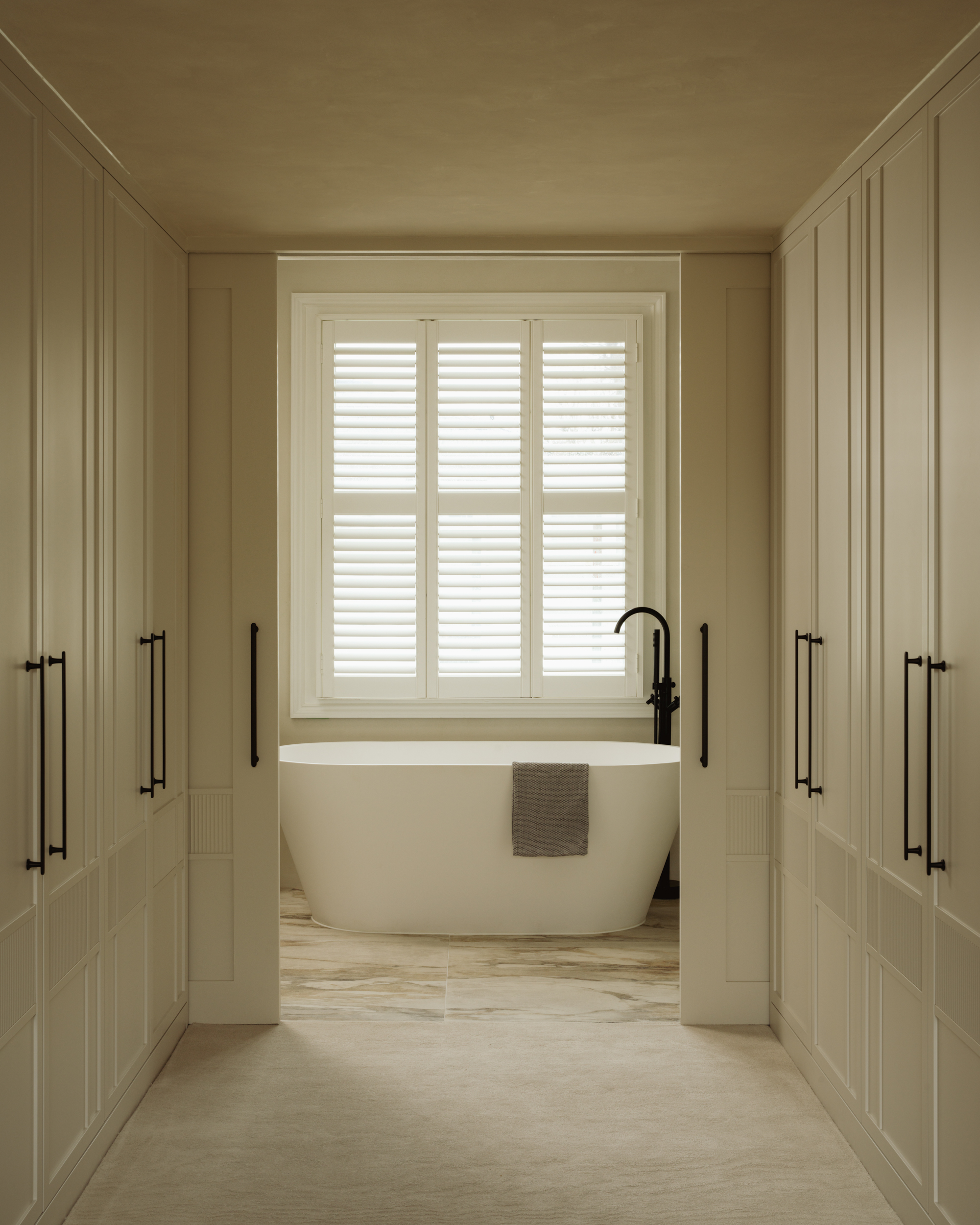

Transitional Design: The Art of Making a Period Home Feel Timeless
I get asked this question a lot. A client will walk me through their Victorian semi in Hale, or their Georgian farmhouse on the outskirts of Wilmslow, and they'll pause and say: "I want my home to feel current, but I don't want to lose the original features." That, right there, is transitional design.
It took me a while to find the right words for what I had been doing instinctively for years. But once I understood transitional design as a discipline, it started to make sense. It gave my clients a framework too, a way of seeing why their homes could be both rooted in history and completely liveable in the present.
So, What Actually Is Transitional Design in High-End Interiors?
Transitional design is the practice of blending traditional architectural character with contemporary interiors. It does not ask you to choose between the two. It does not pretend that Georgian proportions and a clean-lined kitchen cannot coexist. Instead, it finds the places where old and new can support each other, where the difference between old and new becomes part of what makes it work.
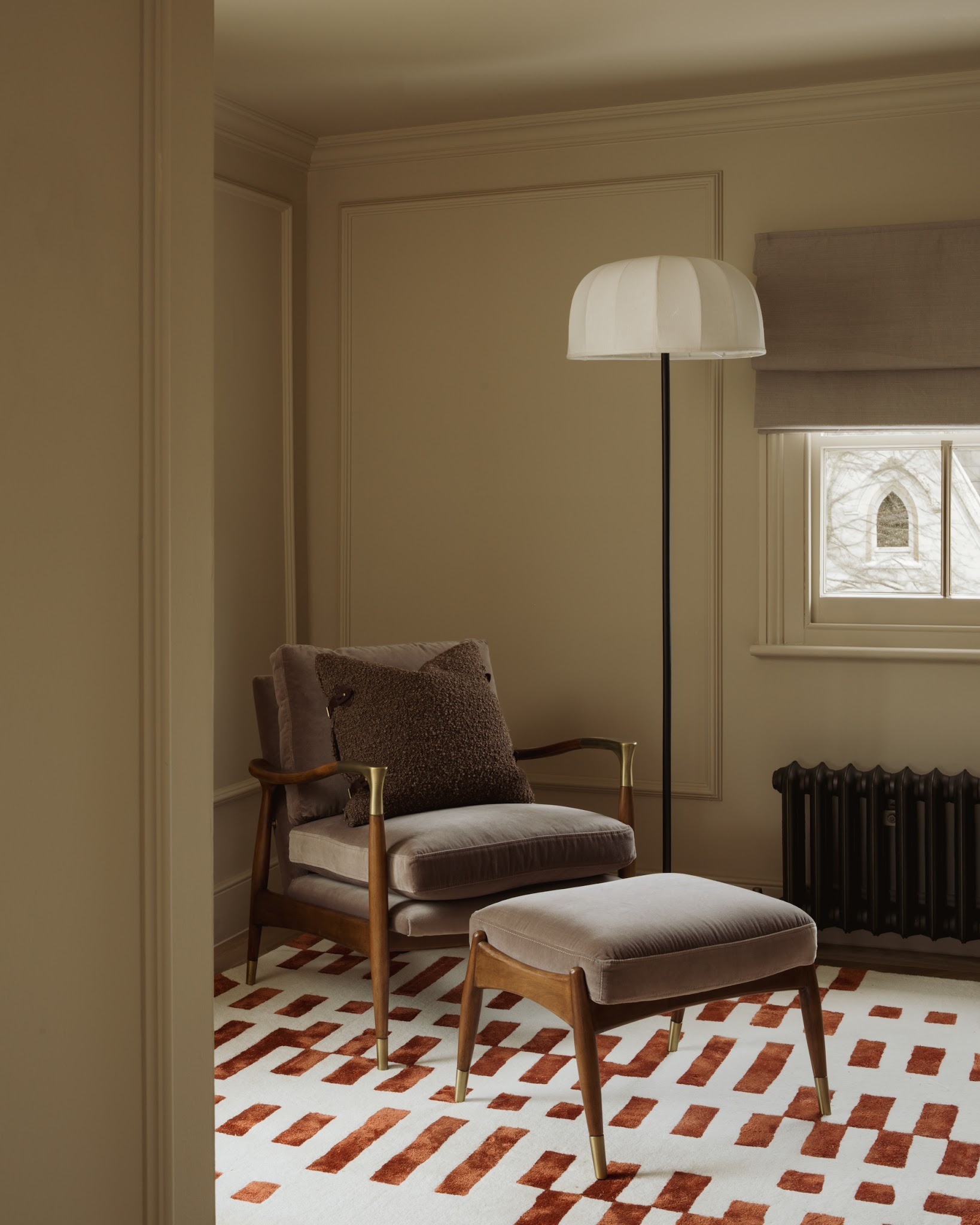
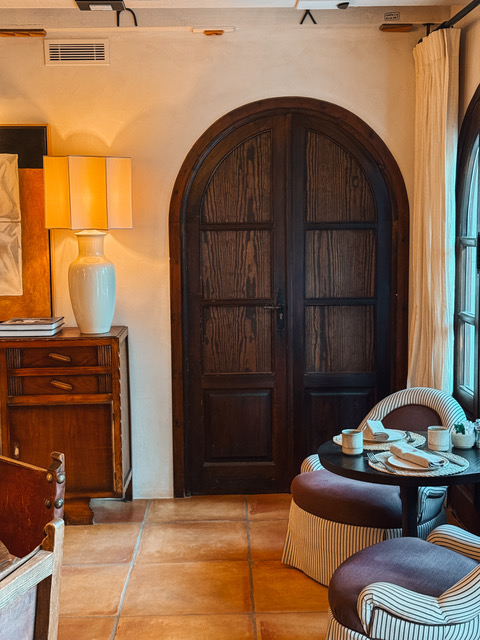
In practical terms, this might look like a period home with original sash windows and exposed stone, paired with a bespoke kitchen in a muted, considered palette. Or a formal reception room with original plaster mouldings, dressed with modern upholstery and understated lighting. The architecture sets the terms. The interiors respond to it rather than working against it.
What transitional design is not is compromise. It is not a halfway house or a safe middle ground. Done well, it is one of the most precise and demanding disciplines in luxury interior design. Every decision has to hold together across two registers: the historical and the contemporary. And both have to feel intentional.
Why Period Homes in Cheshire Are Perfect for This Approach
There is something about Cheshire's housing stock that makes it particularly suited to transitional design. This is a county full of extraordinary period homes. Victorian terraces in Hale, Arts and Crafts properties dotted through Wilmslow, imposing Edwardian villas set back behind stone walls. These buildings have character and detail that a modern build simply cannot replicate. High ceilings. Deep skirting boards. Generous hallways. Proportions that feel settled and confident.
But many of these homes have interiors that have not kept pace. They carry the weight of decades of decisions, or they have been stripped in pursuit of a contemporary look that now feels at odds with the architecture. I have walked into houses where someone has ripped out the original fireplaces and replaced the coving with a flat, featureless ceiling, chasing modernity in a way that has made the house feel less, not more.
Transitional design reverses that. It asks: what does this building actually want to be? And then it builds from that question outward.
Period home renovation in Cheshire, at its best, is about honouring the original intention of a building while making it properly liveable for the people inside it. That means rethinking layouts, updating finishes, and introducing materials and furniture that feel right for now. But it means doing all of that in conversation with what is already there.
The Role of Bespoke Joinery in Getting the Balance Right
If there is one element that consistently holds transitional interiors together, it is bespoke joinery. I have said this to clients for years, and I stand by it. The joinery is where old meets new.
Think about a period library being reimagined as a home office. The room might have original panelling, deep architraves, a fireplace with decorative columns. If you install flat-pack furniture or off-the-shelf shelving, you lose the room entirely. The contrast becomes jarring rather than considered. But if you commission bespoke joinery that responds to the existing detail, matching the proportions of the original panelling while introducing a cleaner, more contemporary profile, the room becomes coherent.
I started working with a small number of specialist joiners early in my career, and those relationships have shaped how TXTURED approaches every project. Bespoke joinery is not just about aesthetics. It is about fitting. About making a piece that belongs to that room, and only that room. In a transitional interior, that level of specificity is essential. You cannot achieve it any other way.
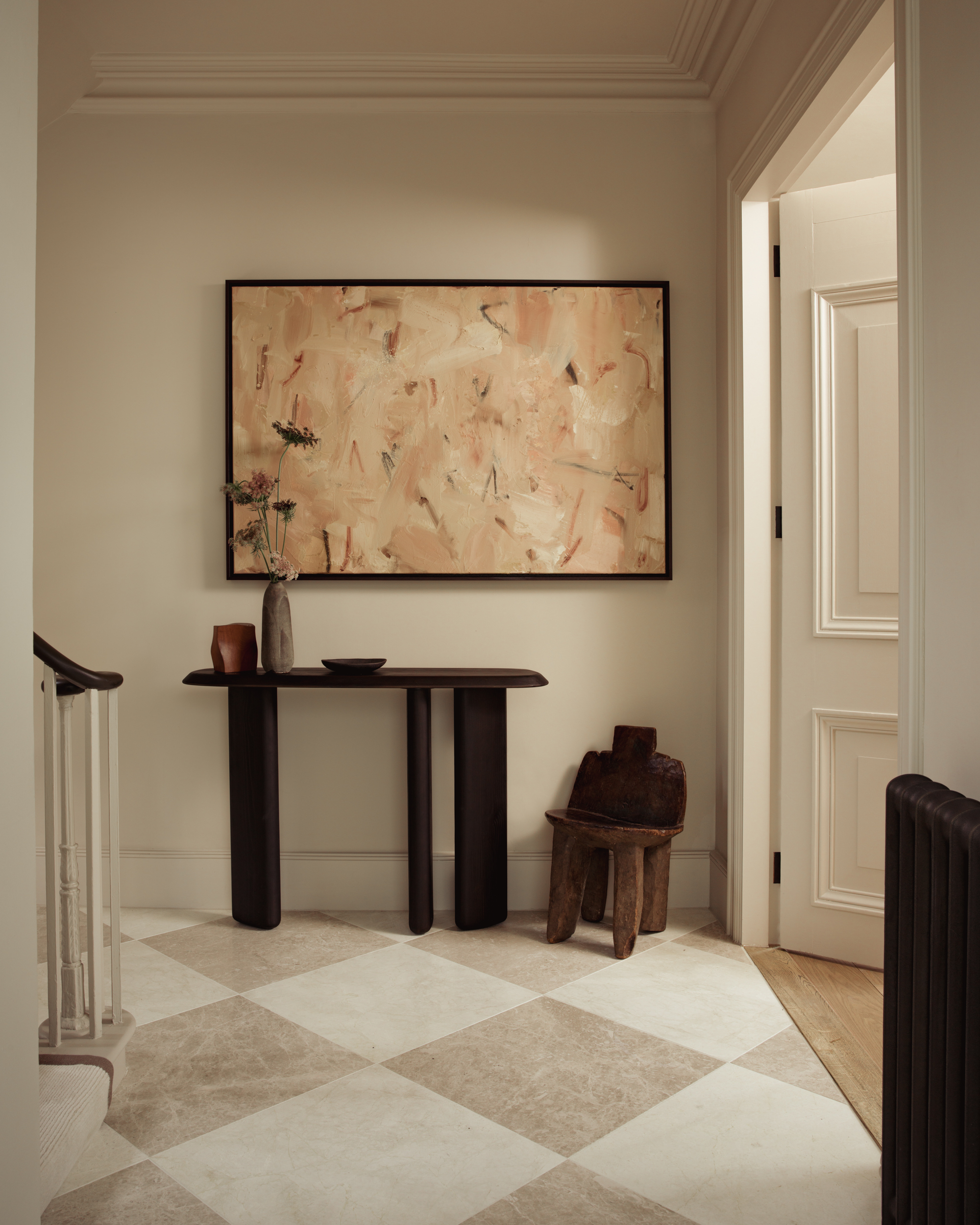
A recent TXTURED residential interior design project in North London shows this clearly. The house had strong period bones: original cornicing, generous proportions, deep architectural detailing. But years of piecemeal changes had left it feeling fragmented. In the main living room, we designed a new fireplace from scratch: bespoke stonework sized and proportioned to the existing architecture, giving the room a focal point it had never properly had. A large abstract artwork hung above gave it colour and life. Elsewhere in the same room, a bar was woven into the joinery so discreetly that it reads as part of the original fabric of the house. The function is built in, but you would never know it. That is what good joinery does in a period home: it makes the new feel like it was always there.
How We Actually Work Through a Luxury Transitional Brief
Every project starts with listening. I do not arrive at a property with a mood board already formed. I walk through the rooms slowly, watching how the light falls. I notice which original features are worth celebrating and which have been lost already. And I ask a lot of questions, usually over a long coffee at the kitchen table.
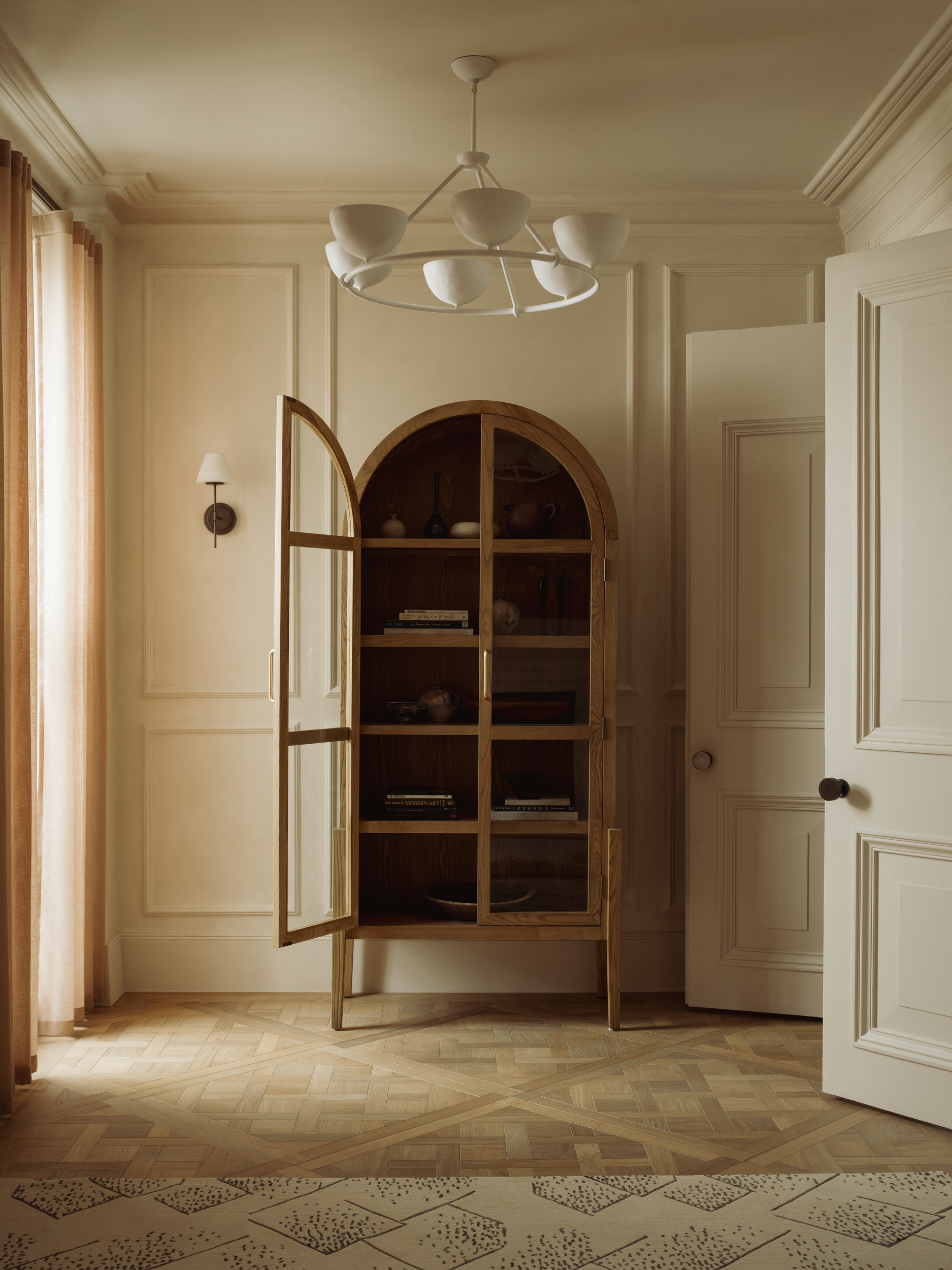
Our North London project illustrated this well. The clients were not looking for a dramatic transformation. They wanted their period home to feel calm and coherent after years of piecemeal changes. We did not begin with individual rooms. We began with atmosphere: how the house felt to move through, the rhythm of its spaces, the way light shifted across the day. Flooring became what drew the disconnected rooms together. The colour palette (layered neutrals, warm browns, soft blush tones) did not come from a mood board. It emerged from an alpine-inspired rug the clients already loved, a personal object that quietly informed everything else. That is the kind of listening that produces interiors that feel lived-in rather than dressed.
What clients often discover through that conversation is that they have more clarity than they think. They know what they love about their home. They know what frustrates them. They know which rooms feel generous and which feel wrong. My job is to translate that instinct into a considered design direction, and then to hold that direction through the entire project.
For luxury interior design, that process has to be both creative and highly organised. The properties we work on are complex. There are planning considerations, structural issues to navigate, specialist trades to coordinate. The design vision has to be robust enough to survive the reality of a live renovation.
I have always been hands-on. I am on site regularly. I am in conversation with the joiners, the plasterers, the stone masons. I care deeply about the details because I know that is where transitional design either works or falls apart. A ceiling height that is a few centimetres off. A joinery profile that is slightly too heavy. A finish that reads as too cool against a warm stone floor. These things matter.
Ready to Rethink Your Period Home? Let's Talk.
If you are sitting with a London or Cheshire property that has potential you have not yet been able to unlock, I would love to hear about it. Whether you have a clear vision or nothing more than a feeling that something needs to change, that is usually enough to start.
TXTURED is a high-end, turnkey interior design service. We manage the entire process, from initial concept through to the day you walk back through your front door. You do not need to manage contractors, chase suppliers, or make decisions you are not equipped to make alone. We do all of that for you. When a client of ours returned to their North London home after time away to find the project complete, their response was immediate: the house finally felt complete. That moment when a home that has carried years of decisions finally feels resolved is what we are working towards.
Our approach is personal. Every project is different because every client and every home is different. We bring together the finest craftspeople in the region, including our trusted bespoke joinery specialists, and we coordinate everything ourselves. We work with a small number of clients at any one time, deliberately, because that is the only way to do this properly. If you are based in Cheshire, Hale, Wilmslow, or the surrounding area, and you are considering a renovation or full interior design project, reach out. An initial conversation costs nothing, and it is often how the best projects start.
Get in touch and let's talk about what your home could be.
The Truth About Transitional Design: Your Questions Answered
What is the difference between transitional design and contemporary design?
Contemporary design focuses on current trends and clean, unadorned spaces. Transitional design brings in traditional elements, whether architectural character, classical joinery details, or period references, and balances them against a modern sensibility. The result is a space that feels current but also grounded and layered.
Does transitional design work in a Victorian or Georgian home?
It is one of the most effective approaches for period homes. These buildings carry strong architectural character, and transitional design works with that character rather than against it. Rather than stripping a Victorian or Georgian home back to a blank canvas, transitional interiors build on what is already there, updating the feel without losing the soul.
How important is bespoke joinery in a transitional interior?
Bespoke joinery is often the critical element. It is where the traditional and the contemporary negotiate. Off-the-shelf furniture and cabinetry rarely holds up in a period home because it lacks the proportional sensitivity those spaces require. Joinery designed specifically for the room, responding to existing architectural details, is what makes a transitional interior feel resolved rather than patchy.
What does a period home renovation in Cheshire typically involve?
Every project is different, but a full period home renovation typically involves a detailed survey of the existing building, an assessment of which original features to restore or preserve, structural work where required, updated services including heating and electrics, and a comprehensive interior design scheme covering layout, materials, furniture, and lighting. A good design team will coordinate all of this from start to finish.
How do I choose a luxury interior designer in Cheshire?
Look for someone who takes the time to understand your home before offering any solutions. A good designer will ask more questions than they answer in the early stages. Look at their previous work with period properties specifically, and check whether they offer a proper end-to-end service, including project management, trade coordination, and installation, or whether they simply produce drawings and leave you to manage the rest.
Is transitional design suitable if I want a more minimal look?
Absolutely. Transitional design does not mean layered or ornate. It can be beautifully minimal. The key is that the minimal elements are chosen in response to the architecture, rather than imposed upon it. Clean lines, restrained palettes, and simple forms can all work brilliantly in a period home when they are suited to the scale and character of the space.