Boutique Hotel Interior Design: Creating the Luxury 'Home Away From Home' Experience"
Boutique Hotel Interior Design: Creating the Luxury Experience Guests Never Forget
I stayed in a boutique hotel in Cheshire a few years ago. Two nights. I still think about the bedroom.
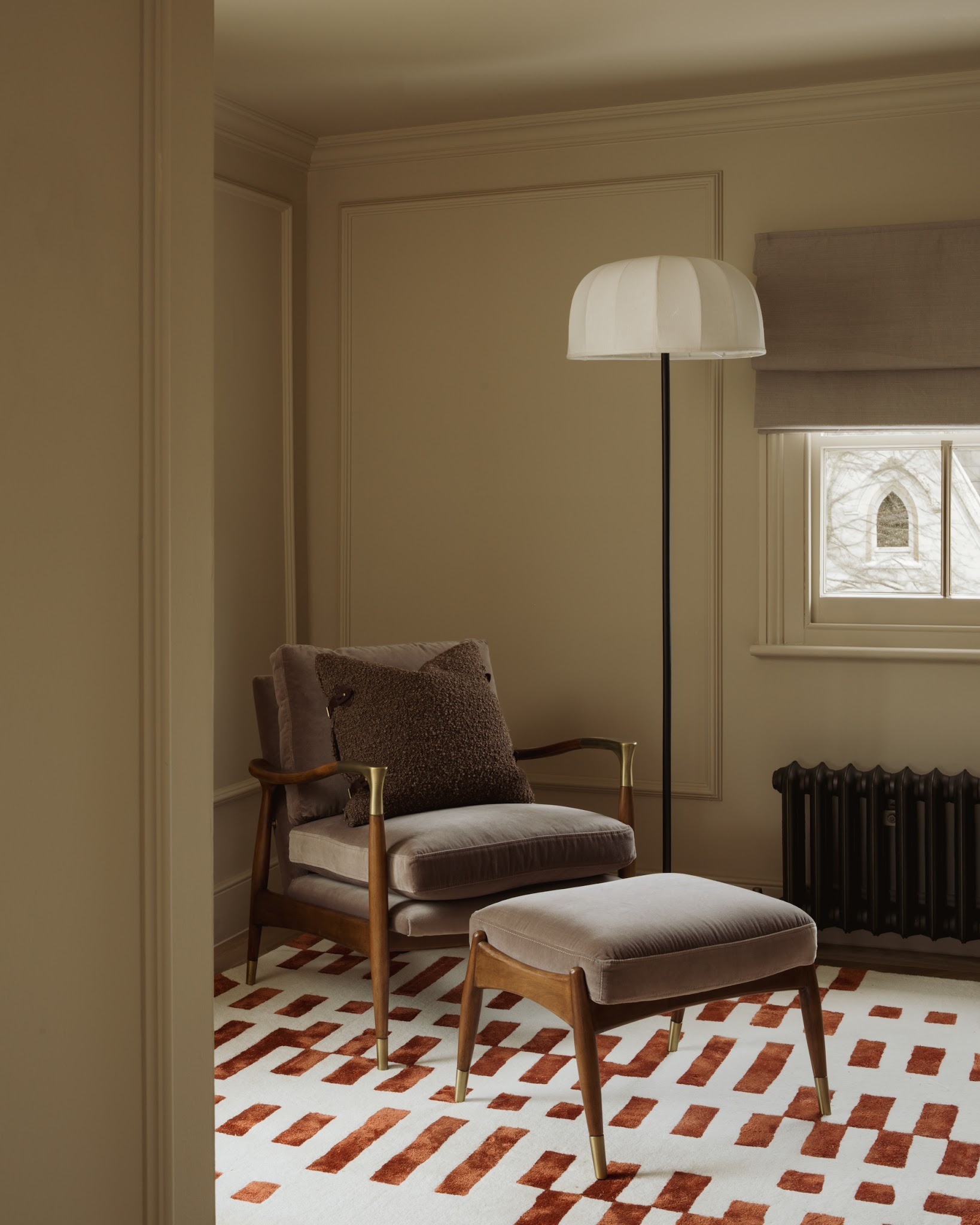
Not because it was flashy. Not because of the thread count or the minibar selection. But because the moment I closed the door behind me, I exhaled. The proportions of the room were right. The light was warm without being dim. There was a chair positioned exactly where you would want a chair when you are reading at ten o'clock in the evening. Someone had thought about how I would actually use that room, not just how it would look in a brochure.
That is the difference between a hotel room and a home. And for hotel investors and developers, boutiqe hotel interior design that understands that difference is where the real return on investment begins. It's the same principle behind Txtured's commerical interior design services more broadly.
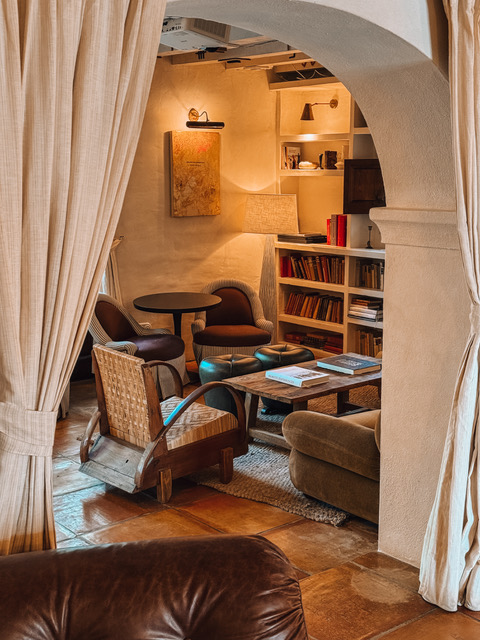
The 'Home Away From Home' Is Not a Feeling. It Is a Design Decision.
People use the phrase 'home away from home' so often it has almost lost its meaning. But when you pull it apart, it is one of the most instructive briefs in hospitality design.
Home means you are not on your guard. Home means the space works with your habits rather than against them. Home means you know where to put things, where to sit, where the light is best in the morning. None of this happens by accident in a well-designed property. Every single one of those feelings is the result of a deliberate design decision.
I have spent years working on high-end residential interiors across Cheshire, Hale and Wilmslow, and the principles that make a private home feel genuinely luxurious are exactly the same principles that make a boutique hotel memorable. Layout before look. Function before aesthetics. Atmosphere before ornamentation.
The investors who understand this are the ones who build properties that guests return to. The ones who don't are the ones with beautiful photography and mediocre reviews.
Layout Is Everything. Literally Everything.
Before we talk about finishes, furniture, or the artwork on the walls, we need to talk about layout. Because a room with a wrong layout cannot be saved by any amount of interior styling. I have seen it too many times.
In boutique hotel design, layout problems often come from trying to cram in too much. A second armchair that nobody wants. A desk positioned against a wall where you have to sit with your back to the window. A bathroom door that swings into the space where a guest is trying to get dressed.
When I worked on a period home renovation project in Cheshire recently, the first thing we did before touching a single surface was map out how the client actually moved through each room across a typical week. Mornings, evenings, weekends. Where they sat to read. Where they charged their phone. Where they dropped their keys when they came in. That exercise shaped everything that followed.
The same discipline applies in hospitality design. Map the guest's day. Where do they sit when they arrive? Where do they work if they need to? Where do they want to be when they are winding down? Design the room around those moments, not around the floor plan.
Bespoke Joinery: The Detail That Guests Feel Before They Notice
If you want to understand the difference between a hotel room that feels expensive and one that actually is expensive, look at the joinery.
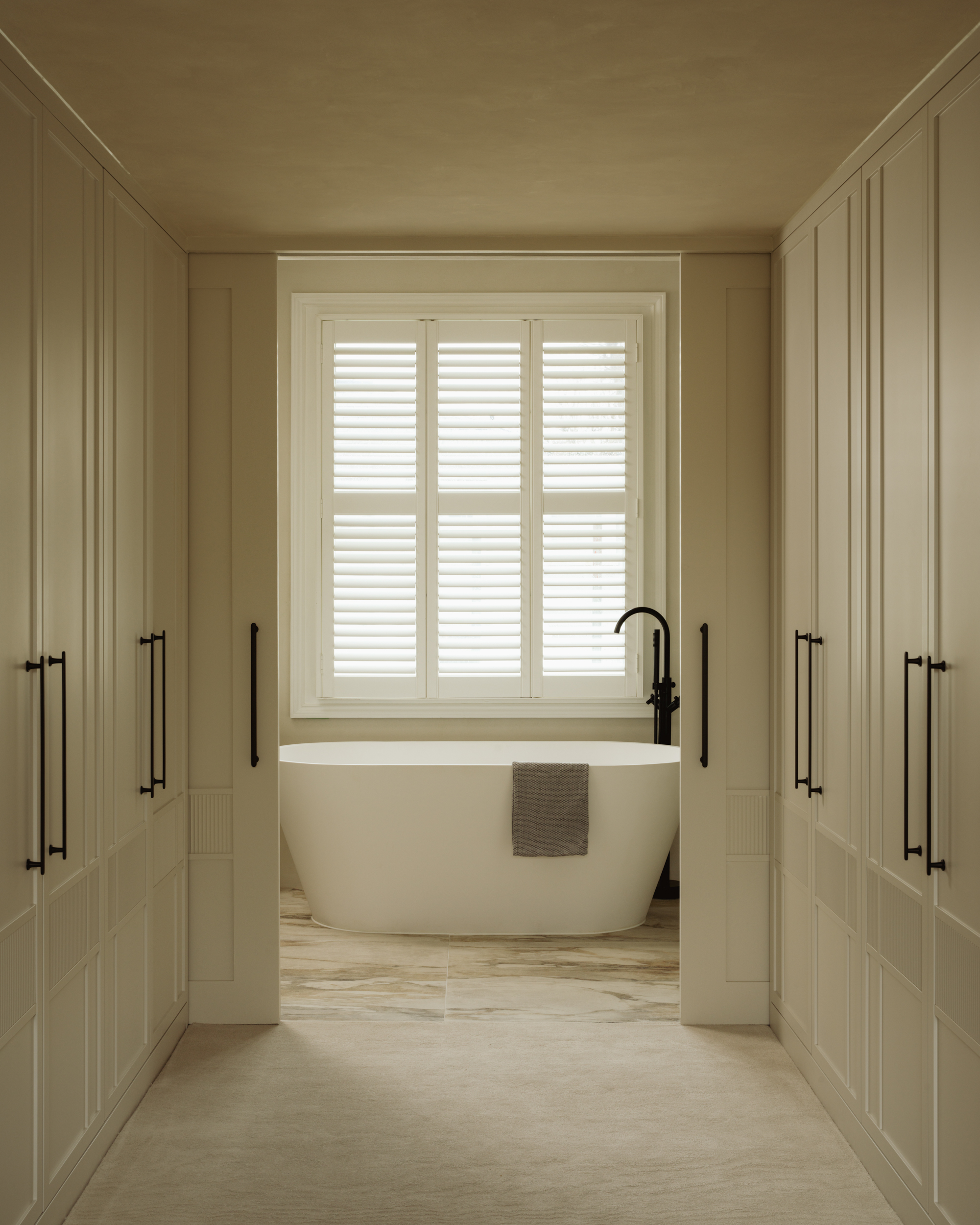
Bespoke joinery is one of the most significant investments in any luxury interior, and it is also one of the most underestimated. When it is done well, guests don't register it as joinery. They register it as ease. The wardrobe that opens smoothly and has hangers at exactly the right height. The bedside table with a recessed section that holds a phone at eye level when you are lying down. The built-in desk that looks like it has always belonged to that particular wall in that particular room.
That sense of inevitability, as I often describe it to clients, is what separates a designed space from a decorated one. Design should feel inevitable in a room, not experimental.
Across the projects I work on, I have specified bespoke joinery solutions for both private clients and hospitality. The investment is consistent. The return, in terms of how a space feels to the people living or staying in it, is significant. Guests may not be able to articulate why a room feels right. But they will remember that it did. And they will come back.
Material Choices That Age Well: The Real Long-Term ROI
Here is the honest truth about luxury interiors in a hospitality context: what looks beautiful at launch needs to look beautiful in year three. And year five. And year seven when a refurbishment would be unwelcome.
I have seen boutique hotel investors make material choices based on what is visually arresting rather than what will endure. Pale linen sofas in high-traffic rooms. Marble finishes with no sealing strategy. Flooring that photographs wonderfully but sounds hollow underfoot.
Good material choices reduce replacements, repairs and regret. That is not a luxury interior design principle. That is a business principle.
The residential clients I work with understand this instinctively. They are making decisions for the home they intend to live in for decades, not seasons. Boutique hotel developers benefit from exactly the same thinking. Invest in materials that age gracefully. Choose textures that become more characterful over time, not less. Commit to quality where it matters: upholstery, floor surfaces, the things that are touched every day.
Window Treatments: The Most Underestimated Element in Hospitality Design
If you want to understand how seriously a boutique hotel takes its design, look at the curtains. Not the fabric alone, although fabric matters enormously. Look at how they hang, how they stack, how much light they allow through at seven in the morning when a guest would rather sleep. Look at whether they meet the floor properly or hover above it in that dispiriting way that marks a room as one where the budget ran out before the details were resolved.
Window treatments do several jobs simultaneously, and the best ones do all of them invisibly. They manage light across the full arc of the day. They contribute acoustic softness to a room: a well-lined, interlined curtain absorbs a surprising amount of ambient sound, which is one of the reasons why rooms with substantial window treatments feel quieter and more private without any obvious acoustic intervention. They also provide what I would call thermal reassurance: the sense, when a curtain is drawn at night, that the room has closed itself around you.
I always specify window treatments as a structural element of the room rather than a finishing touch. A curtain that puddles slightly on the floor, made in a fabric with enough weight to move with authority when drawn, changes the character of a space in a way that no amount of cushion styling can replicate. A blackout lining is non-negotiable. But it should sit behind a face fabric that earns its place in the room: a linen, a velvet, a silk-wool mix that rewards a second look.
Scent: The Design Layer Nobody Sees
Scent is the sense most strongly tied to memory, and yet it is the one that the majority of hotel designers treat as an afterthought. This is a significant missed opportunity, because scent operates on guests below the level of conscious decision-making. They will not write in a review that the room smelled wonderful. But they will remember the stay differently if it did.
The approach I advocate is restraint with intentionality. Not the aggressive branded fragrance that announces itself the moment a guest steps through the door, but a considered scent identity that is consistent across the property without ever becoming oppressive. In common areas, a diffused ambient note, something warm and slightly resinous, can create an immediate and subconscious sense of arrival. In guest bedrooms, the threshold should be lower. Clean, barely-there, with a quality to the air that suggests care without performing it.
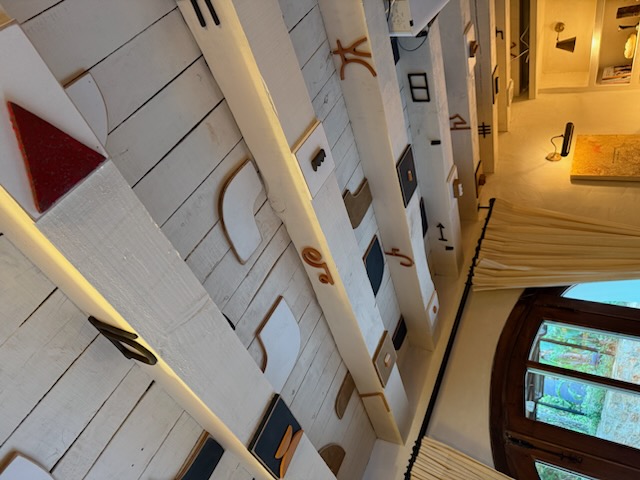
Boutique Hotel Interior Design with Txtured Studio
TXTURED is a high-end, turnkey interior design studio. We work on projects that require genuine expertise in luxury interiors, period home renovation and bespoke joinery, from private residences across Cheshire, Hale and Wilmslow to boutique hospitality projects where the design brief is as much about feeling as it is about finish.
If you are an investor or developer working on a boutique hotel project, and you want a design partner who understands that the guest experience is the return on investment, I would like to talk to you.
We handle every stage of the process: concept, layout, specification, joinery commissioning, material sourcing and installation. You bring the property. We bring the expertise to make it feel like home.
Find out more about our commercial interior design services.
Boutique Hotel Interior Design: Your Questions Answered
Why do so many boutique hotels that look impressive in photographs fail to generate repeat bookings?
Because they were designed for the camera rather than the guest. A room that photographs beautifully but has a desk facing the wrong wall, or curtains that admit light at six in the morning, or a bathroom door that swings into the space where you are trying to get dressed, will not be remembered fondly. Guests cannot always articulate what went wrong, but they feel it. Layout and function have to come first. Atmosphere follows. It rarely works the other way around.
At what point in a hospitality project should an interior designer be brought in?
Before the layout is fixed. That is the honest answer. The most expensive mistake developers make is bringing a designer in after the spatial planning is done, when the room dimensions, door positions and window placements are already set. By that point, you are decorating rather than designing. Involve a designer at the stage when the floor plan can still be influenced, and the difference to the finished result is significant.
When does it make financial sense to commission bespoke joinery rather than buying off-the-shelf?
Almost always, in a boutique hotel context. Off-the-shelf furniture is designed to fit a notional room, not your room. Bespoke joinery is sized and positioned around the specific dimensions and guest behaviours of that space, so it fits better and functions better. It also communicates quality in a way that guests register instinctively, even when they cannot articulate why. In luxury hospitality projects, bespoke joinery is consistently one of the highest-return investments we make on behalf of clients.
How do you stop a period property renovation from feeling like a theme hotel?
By beginning with what the building already has rather than what you want to impose on it. The temptation with period properties is to modernise too aggressively and lose the very qualities that make them worth staying in. My approach is always to understand what the building already offers, its proportions, its materials, its light, and then design interiors that reveal those qualities rather than compete with them. The architecture does meaningful work. The interior design should support it, not perform over it.
What does working with TXTURED actually look like from brief to installation?
It means you hand over a brief and we handle everything from first concept to final installation. TXTURED manages the full process: spatial planning, layout design, material specification, bespoke joinery commissioning, furniture sourcing and styling. For developers and investors who are managing complex projects across multiple workstreams, having a single design partner who takes full ownership of the interior design process is a significant practical advantage. There are no gaps in responsibility and no handover problems between suppliers.